|
I have been actively buying and selling all forms of Americana for parts of eight decades (my first autograph was acquired in 1947!). A partnership, Bernard and Bruce Gimelson, Inc was offered by my father, Bernard Gimelson, in 1964 and during the next twenty-five years we specialized in coins, stamps, autographs, and paintings, and continued to do so until his death in 1989. Some of our clients with whom we formed personal friendships included such luminaries as Walter Chrysler, Jr., Amon Carter, Jr., Malcolm Forbes, Joseph "The Amazing" Dunninger, Jack Lemmon, Robert F. Kennedy, Harry Bass, Mark Haas, Seymour Kaplan, Richard Manoogian, Justin Turner, Nathaniel Stein, Sol Finestone, Joel and Linda Scharf, Dr.John K.Lattimer, and Dr.Joseph E.Fields.
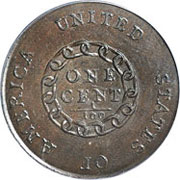
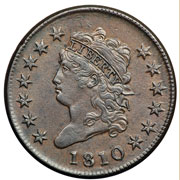
Many great rarities in divergent fields passed through our hands. In 1965 we bought a legendary silver center cent that was discovered in the wall of a renovated building. In that same period we bought and sold the Dunninger Collection of Houdini memorabilia that included 1900 locks and keys, and most of the magic equipment the great escape artist owned at his death. This eventually was incorporated into the Houdini Magic Hall of Fame in Niagara Falls, Canada. Several years later John Fleming, the successor to
Dr.A.S.W. Rosenbach, sold me the Abbe Vignali Collection of Napoleonic Relics which contained the original death mask of the Emperor by his personal physician on St.Helena, Dr. Antommarchi, a copy of Napoleon’s will in the hand of his priest, various monogrammed altar cloths and clothing, and even a pair of his pants!
George Washington has always been a favorite subject and I have owned over forty documented relics from his personal effects including china and glass, pewter, silver, jewelry, art, and furniture. In the last thirty years I have bought and sold several hundred letters and documents of our first President; the most significant of these was the 22 page Whiskey Rebellion speech, also acquired from Fleming, in which The Father of His Country defined the Law and Order clause of the Constitution justifying the action of American troops against settlers in western Pennsylvania who rebelled against the whiskey tax. I have also handled many life portraits of George Washington including multiples by Gilbert Stuart, Edward Savage, Joseph Wright, Charles Willson Peale, and others.
I made two major purchases from the Union League Club of Philadelphia, once in 1975, and again in 1981 in which I acquired dozens of rare marble and plaster statues, and priceless oil paintings including one of Tissot’s masterpieces. My personal favorite was the Rembrandt Peale inscribed teaching copy of Gilbert Stuart’s Athenaeum portrait of George Washington.
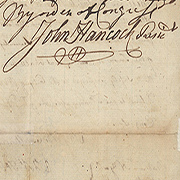
In the next decade I bought and sold what was arguably the finest known letter of John Hancock. Written on July 6, 1776 to the town clerk of Boston, the President of Congress and the first to sign the Declaration sent a packet of printed copies of the great document to be disseminated throughout Massachusetts Bay. His memorable line in that letter was, “We are finally free from the bonds of slavery!” In the early nineties I was instrumental in the acquisition of the finest example of American sculpture, the original Jean Antoine Houdon bust of Thomas Jefferson, which has now been donated to Monticello.
Over the years my interests have broadened dramatically, which you will see as you travel through our copiously illustrated and descriptive web pages. This has been made easier and more pleasant by the help and support of my best friend and life partner, Sandra Thayer. These sections contain fine antiques, autographs, china/porcelain, drawings, historic objects, paintings, postal history, prints, and silver- all of which are offered for sale. We are most interested in purchasing major stamp and coin collections and will also trade fine art objects for important individual items or collections in those fields. We intend to share some portions of our own private holdings here in the future. I hope you enjoy your tour of our site and find something of interest. If you are not successful on your first attempt be sure to visit us again as more will be added on a regular basis.
| On May 28th and 29th, 2016, Sandy and I will be exhibiting at the "Antiques at Rhinebeck" show at the Rhinebeck Fairgrounds, Rhinebeck, NY, booth 132, Building D. It will be our first antique show participation in twenty years! Please come visit. The show is open Saturday, 10-5, Sunday 11-4.
I will be exhibiting at the 5th Wall Street Collectors Bourse, 48 Wall Street (The Financial History Museum, diagonally opposite the New York Stock Exchange) from October 22-24, 2015.
THE ACQUISITION OF AN OLD TIME AUTOGRAPH COLLECTION
When I first entered into the autograph and collectibles business as a full fledged professional, an “old time” collection meant one that was formed in the 1920’s or earlier. You would expect to see provenance connected to such dealers as Thomas Madigan, Walter R.Benjamin, Dr. A.S.W.Rosenbach, or Maggs Brothers. We recently acquired what today would be considered an “old time” collection and the provenance features dealers whom I knew- Gordon Banks from Goodspeed’s Book Shop, Charles Hamilton, and Robert Batchelder.
Most of the autographs presented in this collection were purchased prior to 1980, with a few smattering pieces a bit later, so the majority have been off the market for more than a third of a century. Prominent is a full set of Presidents from George Washington to John F. Kennedy with many of the usual types of letters and documents but in several scarce and even rare forms. John Adams is represented by an early settlement document, signed twice and accompanied by a presentation letter from his grandson, Charles Francis Adams. Jefferson has endorsed a check to his shipper while President, a much rare form than just a check; Andrew Jackson and Martin Van Buren both sign a patent for a “Portable Horse Saving Machine”, a type of saw. Zachary Taylor, then a Colonel fresh from his capture of Black Hawk, asks for a 60 day leave of absence for two legal reasons- he had been sued for removing men from a claim on government lands, and had his own land problems in Baton Rouge, Louisiana. Franklin Pierce, in a letter to his niece, sadly informs her of his wife’s imminent death (she died the following day). In a few attractive letters and documents President James Buchanan congratulates Queen Victoria on her daughter’s marriage, Abraham Lincoln appoints a consul to Singapore, and Rutherford B.Hayes sends his autograph to a collector in Norway.
Theodore Roosevelt writes a forceful political letter; Woodrow Wilson signs a scarce extradition document in an attempt to bring a convicted forger back to the United States from Canada. Warren Harding tells a soldier how to get in touch with Major General Leonard Wood, and Ex-President Eisenhower gives his feelings on why he ignores “experts” on his activities. This set of Presidential letters and documents may be viewed on my website under the heading “Presidents”.
In addition you may want to look at the “Autographs” section, which displays letters and signed documents by such diverse historic characters as William Penn, Thomas McKean, Nicholas Gilman, James Madison, John Quincy Adams, Francis Scott Key, George III, and others.
*UPDATE* ALL OF THIS COLLECTION HAS BEEN SOLD. WE ARE BUYING MORE SO KEEP WATCHING OUR WEBSITE
Albert Sack
I first met Albert and his brothers when I was about twelve. I walked into their gallery and asked if they had any autographs for sale. Harold and Albert took me downstairs and said that I should be buying American furniture. They showed me a row of Queen Anne side chairs that looked to be a block long.
I grew to know Albert as a friend and went on numerous calls with him. He used me to lift a lot of heavy furniture, which was not only enjoyable but also highly informative. Once we went to see an older woman who was the manager of an important family trust. She showed us a serpentine front Chippendale three-drawer chest that Albert had to have. He offered her a sum well into the six figures and she agreed to the price. Albert wanted to take the piece on the spot and she was horrified. “You cannot take it now”, she said, “My underwear is still in it!”
Albert was the consummate dealer- a great scholar, salesman with a super sense of humor and ferocious in acquiring fine items in his field. In the early 1980’s I had just purchased a major manuscript archive from a family in Long Island. Walking into the house to pick it up I could not help but notice a Lighthouse clock sitting atop its own little shelf next to the fireplace. On closer examination one could make out the name “Aaron Willard” on the face. The owner told me that his father had purchased this clock in 1922 in Boston for $1,000. And better than that it was in Albert Sack’s book, Good, Better, Best! I asked him if it might be for sale and he said yes, as he was tired of paying the insurance on it. I immediately called Albert who, it turned out, was sick in bed with a 102-degree fever. He asked me where I was, and made me promise to come get him immediately. In the background I heard his wife screaming, “you are too sick, you are not going anywhere”. He barked at me to ignore that and come get him. I drove back to New York, bundled him in a blanket and took his Lincoln back to the clock. I practically carried him into the house and he was welcomed like the guru he was by the owners. He looked at the clock and immediately I could tell there was something wrong. He put the clock on the table and removed the dome. At that point, to everyone’s surprise, he declared the clock a clever fake, made by two unscrupulous dealers he knew in Boston. The obvious question was how did it get into his book in 1950. Having never seen the piece, he surmised that he had copied a photograph from his father’s estate because it was an unknown form of the clock. By his actions Albert taught me that if you get offered something great, even though it may not always turn out to be what you want, you must jump on the opportunity and not wait to be skunked by another dealer. (As a footnote, this clock appeared on the back cover of a major auction catalog about three months later where it did not reach the reserve of $90,000!)
On a more successful excursion, I brought Albert with me on one of my rare book leads. The collector told me that he also had a house full of “period” furniture. It was really exciting to bring the top dealer in American furniture to one of my calls. The excitement rapidly dissipated after our first walk around the house which was filled with low grade Victorian and early 20th Century junk. I was getting ready for the ride home and a myriad of apologies to Albert when walking through the garage on our way out Albert asked the collector what he would take for the old table that looked like someone had poured ten different colors of Benjamin Moore house paint on it. “You want my paint table? the collector asked; ‘You can have it for $100”. As we carefully removed a few paint cans from the top, I noticed that it was a Queen Anne tea table. I asked Albert afterwards how he could possibly have noticed it. He replied, “You know I was always a leg man; the legs gave it away!” That piece is now the keystone of a major collection.
Since Albert moved to North Carolina I have only seen him sporadically the last few years. However, I did speak to him on several occasions, most recently earlier this year when he asked me if I knew where he could obtain any great pieces of American furniture for a client. So right up to the end, Albert Sack was still looking for that elusive piece.
I have a hundred more stories about my friend Albert Sack but most of them will be saved for my book. Here is a tribute given by his late brother Robert: At his 75th birthday party Robert gave a speech in which he said “ I have learned half of what I know from Harold, the other half from Albert and I don’t know half of what either of them knows”.
Rest well my old friend.
To Buy or Not to Buy?
February, 2010. In any economic downturn both the collector and dealer are in a quandary: should I buy, try to sell what I have, or just sit tight? I have always looked at bad economic times as an opportunity to acquire better objects. Over the last year and half I have bought thirty major paintings and some important autographs. One example of a painting acquired during this recessionary downturn is a Charles X.Harris oil entitled "The Moulders" which was exhibited at the NAD in 1886. It is a whimsical picture showing the artist working on a sculpture in his teacher's (the French artist, Gerome) studio while overturning a bucket of plaster. The ornate frame was specially designed and purchased by the artist for the NAD exhibition. We also bought a spectacular three page handwritten letter of Washington to the mathematician Nicolas Pike, congratulating him on the publication of the first American arithmetic book in 1786. In the letter Washington emulates the style of Benjamin Franklin saying, "The science of figures to a certain degree, is not only indispensably requisite in every walk of civilized life, but the investigation of mathematical truths accustoms the mind to method and correctness in reasoning, and is an employment peculiarly worthy of rational beings."
So obviously, I have elected to continue acquisitions holding true to the precedents I have set for myself during the last fifty years of collecting and dealing in rare objects. Now is not the time to run scared although many of my colleagues are hanging their heads and decrying the horrible lack of sales. They have missed the point. It is always important to buy important objects as bad times never last forever, and when they do improve you have wisely accumulated wonderful pieces that you can now offer for sale or admire in your collection. I invite all offers of important items in virtually all fields as I still have confidence in quality.
Whether you want to buy or sell, or just want to talk about autographs, we will be exhibiting at the Professional Autograph Dealer's Association Show (PADA), Sunday, April 11, 2010 at the Park Lane Hotel, 36 Central Park South, NYC, in the Ballroom, 9 AM to 5 PM.
The “D” Word
October 1, 2008. Now let’s see. The U.S.Government including the President, the Cabinet, and Congress, wants the American people to believe that an inept group of Washington bureaucrats can oversee millions of defaulted or nearly defaulted mortgages and “eventually” turn a profit. We should wonder about several aspects of the recovery or bailout proposal. Like for instance, how many of these mortgages are on houses that have little or no value and probably will never have any? These would be $50-$100,000 homes where the owners took the mortgage money, got a kickback from it, and stripped the house of copper, all other metals, moldings, light fixtures, fireplace mantels, well, you get the point. How many are for homes that are medium priced and may still be difficult to sell? And how many are for larger, more expensive properties, which won’t be salable until the banks loosen the money flow for mortgages?
In all this mess the fate of art and manuscript depositories, museums and libraries, is somewhat lost. Where is the money to run these institutions going to derive from this year? Certainly, major brokerage houses that have weathered the storm are not going to be in a mental or financial position to help the museums. Nor are investors about to donate large amounts of money; even billionaires have lost fortunes including many who were heavily invested in the likes of AIG, Merrill Lynch, Bear Stearns, Wachovia, and many others. I remember my father selling some coins to one of the Dupont family in the mid-60’s. He really didn’t want to buy anything as his stock portfolio dropped from $600,000,000 to $400,000,000 and he felt he was “poor”. That will be the feeling for many of the very wealthy in this country as the worldwide economic crisis continues, undoubtedly getting worse.
So what can be done to help the guardians of our art, manuscript, and historical heritage- the thousands of museums and libraries throughout the country who will have trouble with operating expenses, maintenance of their holdings and buildings, and of course, expansion? Now we come to the definition and explanation of the “D” word, which is, of course, DEACCESSION. Nearly all institutions have a myriad of material that is not germane to their collection. If these items have had no legal strings attached by their donors, and they are not iconic images or historic objects significant to the region, they must and should be SOLD.
We have aided numerous institutions in DEACCESSIONING paintings, manuscripts, sculpture, rare coins, stamps, rare books, automotive items, political collections, and other items. Most prominent in our history were two major purchases from the Union League Club of Philadelphia in 1975 and 1981. I understand the reluctance of curators to sell material outright but there is an advantage to doing so- you are paid immediately and do not have to wait for the vagaries of the economy and the costs, buy-ins, and unknown quantities of an auction. On the other hand, some things lend themselves better to an auction.
We can help by doing a survey of your entire collection and provide our suggestions as to what should be sold directly into the marketplace and what should go to auction. Also, we can give our educated opinion, the result of nearly fifty years in the business, on what should be inviolate in the archive or collection. There is no one in the field of collecting who is capable of advising in more areas than we are. So enjoy our website and give us a call if we can be of service.
AS THE GANGSTER JOEY GALLO SAID, “TO THE MATTRESSES"
September 17, 2008. Early this morning the U.S. government avoided the largest bankruptcy in the history of the world by saving AIG, an international insurer, who mishandled a trillion dollars or so, completely forgetting about its investors. A few days ago Lehman Brothers, an old investment banking company, succeeded in posting the largest bankruptcy filing ever, nearly $700 Billion that made Enron’s failure look like a choir practice. Hopefully those responsible will pay dearly for their policies. The questions are how does the collector react to these perilous financial times and where should he put his money?
Not ever aspiring to be a financial guru, I have acted as an expert advisor to collectors, dealers, and museums in numerous fields of art and antique acquisition for the past fifty years. So I know something about placing money in spots other than the stock market, banks, or other completely fiscal investments. I have helped form hundreds of collections, and they are just that, as I do not think of them as purely investments. When the client has listened to my advice on what to buy and the direction his or her collection should take, they have never lost a nickel when the inevitable decision comes to sell all or part of their treasures.
In times like this financial chaos causes people to do unusual things. As is seen in the downward spiraling housing market, everyone wants to sell at the same time, and prices constrict This also can and has happened in all fields of collecting. Many great objects that have not been on the market for many years will start to surface; this gives the astute collector the OPPORTUNITY to acquire pieces that he ordinarily would not be able to find. Rather than keep your money in a checking account earning less than 1% or a savings account earning less than 2% doesn’t it make sense to add to or form a collection of important objects which you not only can enjoy, but if purchased wisely will increase in value with time. I have never advocated buying antiques or art solely as an investment but over the years it has been consistently proven that fine and rare objects increase in value far more than investments controlled by greedy and dishonest people who have their own purpose in mind.
|